Padel
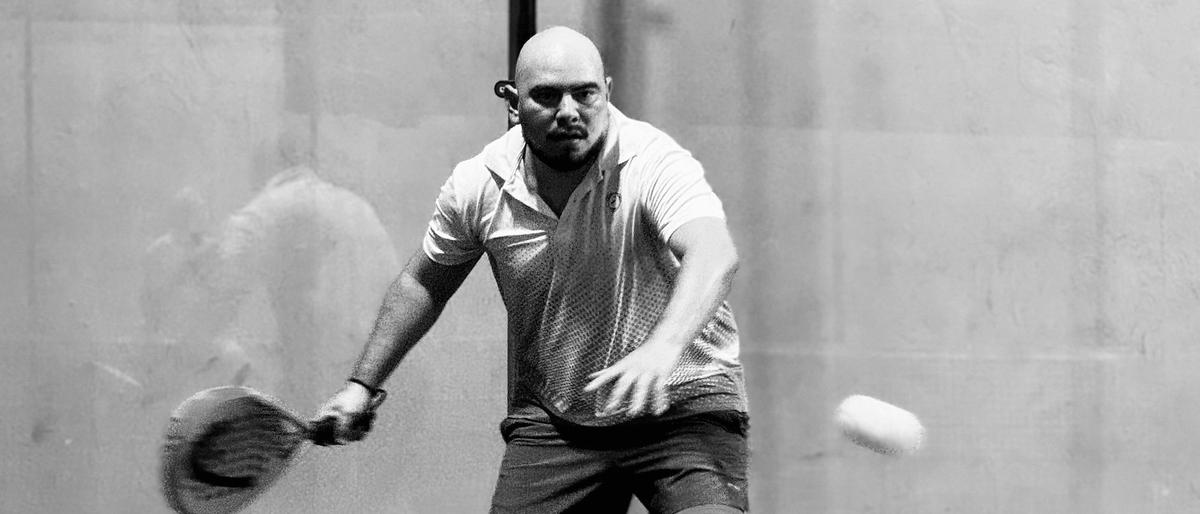
Padel is a racket sport for two pairs, played on a small enclosed court with a net across the middle and walls that keep the ball in play. Players use solid, stringless rackets and a ball similar to a tennis ball, serve after a bounce, hitting the ball at or below waist height, and score as in tennis.
At a glance
- Also known as
- Pádel, Padel tennis
- Court
- 20 m × 10 m (65 ft 7 in × 32 ft 10 in)
- Played with
- A racket and a ball
- Formats
- Doubles, Singles, Ladder, Box league
- Governing body
- International Padel Federation
- Origin
- Acapulco, Mexico, 1969, credited to Enrique Corcuera
The court
Formats
- Doubles Two pairs, the standard form of the game in club play and on the professional tours.
- Singles One against one, played informally at some clubs, often on a narrower court.
- Ladder A club ranking in which pairs or players challenge those placed near them to move up.
- Box league Players or pairs are split into small groups that each play a round of matches over a set period, with movement between groups at the end.
About padel
Padel is played two against two on a small rectangular court that is closed in on all sides. A net divides the court in half, as in tennis, but the ends and parts of the sides are solid walls, with wire mesh making up the rest of the enclosure. Rackets have no strings: they are solid, perforated paddles, and the ball is similar to a tennis ball.
A point starts with a serve: the server bounces the ball and strikes it at or below waist height, sending it diagonally into the opponents' service box. From then on the ball has to cross the net and land on the other side before it touches anything else. Once it has bounced on your side you may let it come off your walls and still play it, which gives rallies their character: much of the game is about reading the rebound rather than hitting winners.
Because the walls return so many shots, padel tends to reward placement, patience and teamwork over raw power. Pairs often build points with lobs and soft balls to the feet, waiting for a chance to finish at the net. Scoring borrows from tennis, with games and sets, although events may choose a deciding point at deuce to keep matches moving.
The game took shape in Mexico and grew first in Spain and Argentina, which remain its heartlands. It has since spread across Europe, the Middle East and the Americas, and an international professional tour now runs under the International Padel Federation.
How it is played
Padel is played in pairs on an enclosed court: the ball must cross the net and bounce once on the opponents' side, after which it may be played off the walls. Scoring follows tennis, with games and sets.
Explore padel
- RulesServe, scoring, rallies and the walls and faults and losing the point, each point from the official rules
- EquipmentRacket, ball and net limits, in metric and imperial
- CourtsCourt size 20 m × 10 m (65 ft 7 in × 32 ft 10 in), drawn to scale · 5 famous venues
- Brands3 brands and what they make
- Players20 players on the men’s and women’s tours, with the titles they have won
- Competitions3 competitions and tours, and who runs them
- Organisations23 organisations, from International Padel Federation to national federations, by region
Related sports
Sources
- History of padel, International Padel Federationpadelfip.comOfficial rulebook or governing body (tier 1 of 5)
- Rules of Padel, International Padel Federation, Revision applicable from 1 January 2026padelfip.comOfficial rulebook or governing body (tier 1 of 5)